

EBITDA is generally employed for larger corporations and organizations, whereas SDE is more suitable for smaller companies. Potential buyers and investors generally use EBITDA and its variations to compare the valuations of different companies. On the other hand, business owners can benefit from EBITDA by enhancing their exit strategy and making numerous business decisions, particularly operating decisions.

Is your business financially fit? Your debt-service coverage ratio can tell you
It instead takes a firm’s earnings and adjusts it by adding in depreciation and amortization, then reducing working capital changes and expenditures. For many investors, EBITDA is the single most important profit metric. While net income is important, EBITDA provides a purer view of the operating profit engine of a business. Overall, a good EBITDA demonstrates efficient operations, strong cash flow conversion, profit margins that support growth, and resiliency across business cycles. It shows investors that the core business produces sizable profits over the long term.
- A common valuation method is to apply a valuation multiple, which may be based on EBITDA, revenue or other metrics.
- After almost a decade of experience in public accounting, he created MyAccountingCourse.com to help people learn accounting & finance, pass the CPA exam, and start their career.
- This difference is significant for industries that rely heavily on tangible assets, such as manufacturing.
- EBITDA should not be used exclusively as a measure of a company’s financial performance, nor should it be a reason to disregard the impact of a company’s capital structure on its financial performance.
Factors Influencing EBITDA Multiples
“EBITDA allows you to compare two companies in different locations, decide how much a business is worth and benchmark it against industry averages,” Cao says. EBITDA allows you to compare two companies in different locations, decide how much a business is worth and benchmark it against industry averages. A company’s EBITDA result may be used in different situations that call for financial analysis and decision-making.
Earnings Before Interest and Taxes (EBIT)
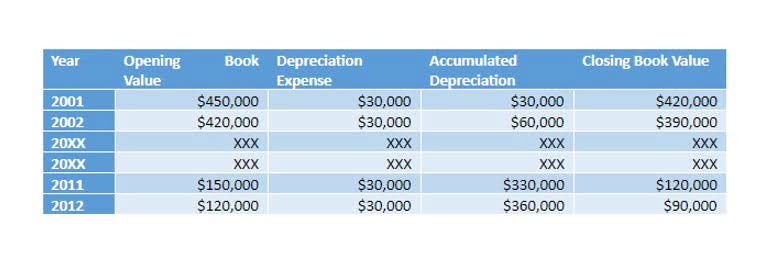
- Additionally, companies will sometimes break out the individual assets that lead to these expenses.
- By stripping away interest, taxes, and non-cash expenses, it focuses on the core earnings generated by the business’s day-to-day activities.
- D&A is heavily influenced by assumptions regarding useful economic life, salvage value, and the depreciation method used.
- Strong EBITDA relative to debt obligations indicates sufficient cash flow to cover interest expenses, suggesting better debt-servicing capacity.
- A good EBITDA is a higher number compared to other businesses in the same industry, regardless of size.
- As a point of comparison, let’s consider a company with a negative net income of $5,000.
However, while it can reveal much about the financial health of a company, it’s important to keep Online Accounting in mind that EBITDA and cash flow are not synonymous. It’s best to think of EBITDA as an indicator of a company’s profitability that can be used as a surrogate for cash flow. When comparing two companies, the Enterprise Value/EBITDA ratio can be used to give investors a general idea of whether a company is overvalued (high ratio) or undervalued (low ratio). Different companies have different capital structures, resulting in different interest expenses. Hence, it is easier to compare the relative performance of companies by adding back interest and ignoring the impact of capital structure on the business.
EBITDA is what’s left after subtracting operating expenses (but before subtracting interest, taxes, depreciation, and amortization). Revenue is the top line — EBITDA is a more refined look at profitability. So EBITDA is more of https://demo.tggroup.my/2021/05/13/nonprofit-bookkeeping-tax/ a “clean” version of operating income that strips out non-cash expenses. Gross profit is just revenue minus the cost of goods sold (COGS) — basically, how much you make from selling your product or service. EBITDA goes much further, factoring in all operating costs except interest, taxes, depreciation, and amortization. So while gross profit looks at just the direct costs of making your product, EBITDA gives a broader view of profitability from core business operations.

Example EBITDA Calculation for Small Business
The ultimate goal of the equation is to give a more precise measurement of corporate performance without the influence of accounting or financial deductions. Once you have calculated the Enterprise value, divide it by the company’s EBITDA to find the EV/EBITDA Multiple ratio. A high ratio shows that the company value might be overstated, while a low ratio may indicate that the company is undervalued. Incorporating these considerations allows for a more nuanced and reliable use of the EBITDA metric, ensuring that it is a robust tool for valuing businesses across diverse industries. However, businesses can also calculate Adjusted EBITDA every quarter for internal use.
EBITDA Formula
In some cases, the formulas can generate two different EBITDA figures for the same company, as net income and operating income are calculated differently. Next, depreciation and amortization are added back in from the statement of cash flow. Analyzing earnings before removing these items helps provide a clear indication of the company’s ability to generate cash from its operating activities.
The EBITDA margin shows how much operating expenses are eating into a company’s gross profit. In the end, the higher the EBITDA margin, the less risky a company is considered financially. When you’re comparing the profitability of what is ebitda one business to another, EBITDA can help you calculate a business’s cash flow.